Labor Value Content: Why It Matters After USMCA 2026
If the automotive sector is the canary in the coal mine for USMCA, Labor Value Content is one of the clearest signals of where North American trade policy is heading.
After the July 1, 2026 outcome, USMCA did not end. But it did enter a different stage: because the agreement was not extended for another 16 years, it remains in force under an annual review cycle that can continue through 2036.
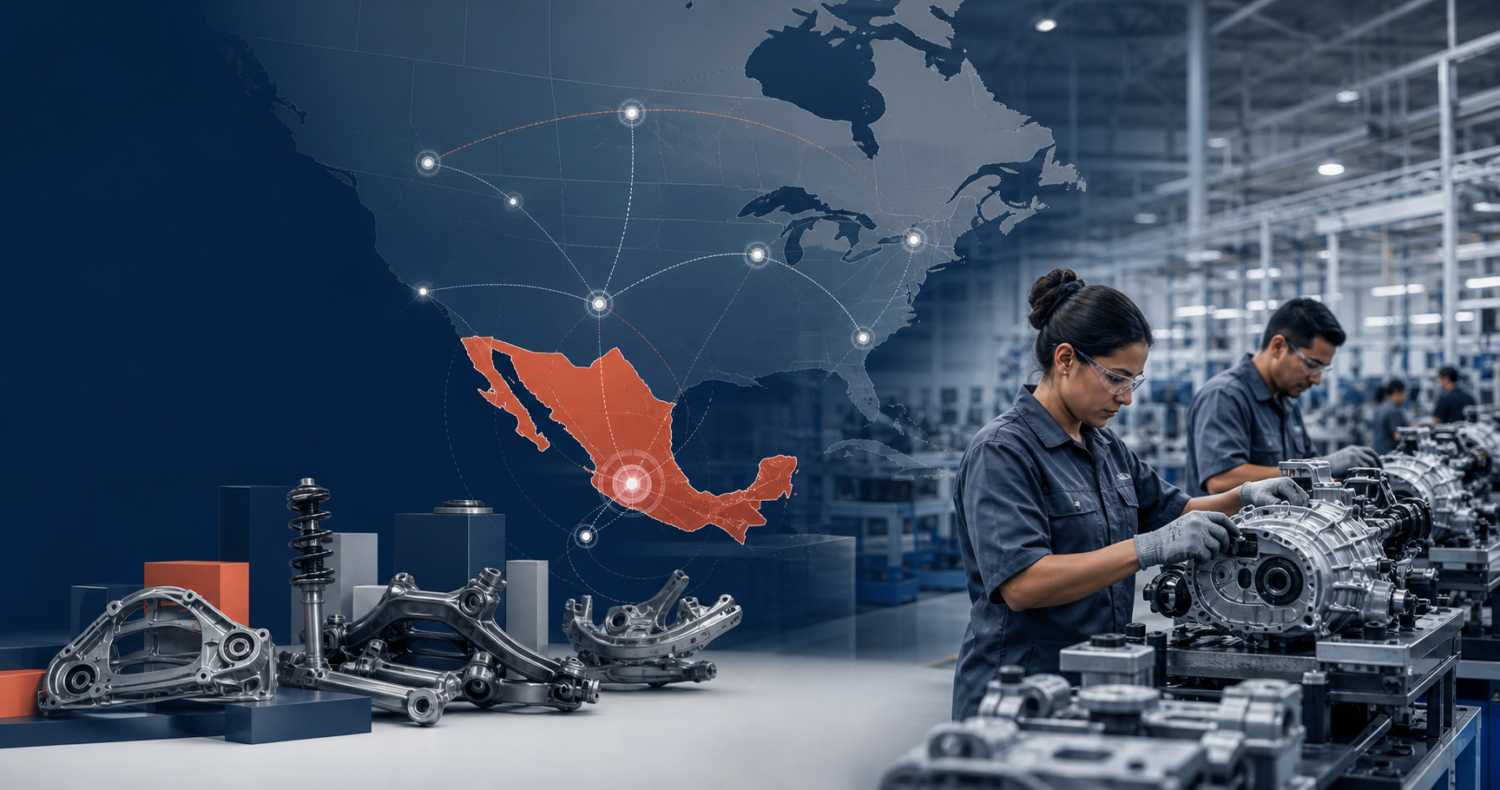
For manufacturers operating in Mexico — or evaluating manufacturing in Mexico — this means current tariff benefits remain available, but compliance planning has become more strategic. Labor Value Content is no longer just an automotive technicality. It is a window into the next phase of regional trade enforcement: production in North America must demonstrate real value, documented compliance, and verifiable labor standards.
Table of Contents
What Is Labor Value Content Under USMCA?
Labor Value Content, or LVC, is a USMCA requirement that applies to certain passenger vehicles, light trucks, and heavy trucks.
In simple terms, it requires a percentage of a covered vehicle’s value to come from production activities performed in North American facilities where direct production workers earn an average base wage of at least $16 USD per hour.
The purpose is to raise the standard for regional integration. USMCA is not only designed to allow qualifying goods to cross borders with preferential tariff treatment. It also requires those goods to reflect regional content, meaningful production processes, and labor conditions aligned with the agreement’s framework.
In automotive, LVC works together with other strict requirements, including regional value content, rules of origin, and specific sourcing rules for steel, aluminum, and critical components. That is why automotive remains the most exposed sector to USMCA audits, enforcement, and future rule adjustments.
What Changed After July 1, 2026?
The most important change is not that USMCA stopped applying. It did not.
Current preferential tariff treatment, rules of origin, certification procedures, customs benefits, and dispute settlement mechanisms remain in place. Companies can continue claiming USMCA benefits as long as they meet applicable origin and recordkeeping requirements.
What changed is the negotiation environment.
Because the agreement was not extended during the July 1, 2026 joint review, USMCA now enters annual reviews. That creates recurring negotiation cycles among the United States, Mexico, and Canada.
For manufacturers, this does not create immediate operational disruption. But it does increase the importance of designing operations that can withstand future changes. Compliance is no longer something to check once. It needs to be documented, audited, and adaptable over time.
LVC and the Rapid Response Labor Mechanism Are Different — But Connected
Two concepts are often discussed together, but they are not the same.
Labor Value Content is a high-wage content requirement for covered vehicles. It helps determine whether those vehicles qualify for preferential tariff treatment under USMCA.
The Rapid Response Labor Mechanism, or RRLM, is a labor enforcement tool that allows facility-specific investigations in Mexico when there are allegations involving freedom of association and collective bargaining rights.
They are separate mechanisms. But they point in the same direction: labor compliance is now part of trade compliance.
In recent years, the RRLM has been used frequently in Mexican manufacturing facilities, especially in automotive and auto parts, but not only there. That confirms that labor conditions, collective bargaining documentation, union relationships, and facility-level practices are no longer isolated HR matters. They can affect operational continuity, exports, and access to preferential treatment.
Why LVC Matters Beyond Automotive
Technically, LVC remains an automotive-specific requirement. But its logic is relevant far beyond automotive.
The current USMCA conversation is centered on three issues: rules of origin, non-regional content — especially inputs connected to China — and labor enforcement. In that context, LVC functions as a regulatory precedent. It shows that North America is willing to connect preferential market access with verifiable labor standards.
For companies in electronics, machinery, industrial equipment, medical devices, metalworking, and advanced manufacturing, the question is not whether they will face the exact same LVC requirement tomorrow.
The better question is whether their Mexico operation can demonstrate real regional value, traceability, and labor conditions that can hold up in a stricter enforcement environment.
This is especially relevant for companies moving production from Asia to Mexico through nearshore outsourcing. Mexico’s advantage should not rely only on labor cost. It should be built on proximity, technical talent, industrial infrastructure, compliance, and supply chain resilience.
What Could Come Next in USMCA Annual Reviews
There is currently no formal expansion of LVC across all manufacturing sectors. However, the annual review cycle creates room for gradual or sector-specific changes.
The issues most likely to remain on the table include:
- Stronger enforcement of existing labor standards.
- More audits or verifications at manufacturing facilities.
- Stricter review of rules of origin.
- Increased scrutiny of Chinese or other non-North American inputs.
- Possible discussion of labor-related requirements in strategic sectors.
- Closer coordination between U.S. and Mexican labor and trade authorities.
For companies, the key is to prepare before future changes become formal requirements. In an annual-review environment, the advantage will not belong to companies that react quickly. It will belong to those with strong compliance systems already in place.
What This Means for Your Mexico Operation
Labor conditions in Mexico are no longer only a corporate responsibility or reputational issue. They are part of commercial risk management.
A better-prepared operation should have:
Clear and Traceable Collective Bargaining Documentation
Labor documentation should be complete, current, and aligned with both Mexican labor obligations and USMCA commitments.
Competitive and Documented Wage Structures
Although the $16 USD per hour threshold applies specifically to automotive LVC, the broader regulatory trend favors operations that can demonstrate formal, competitive, and auditable labor conditions.
Internal Compliance Processes
Companies should be able to respond quickly to information requests, audits, origin reviews, or questions about labor practices.
Supply Chains Aligned With Rules of Origin
Labor compliance does not replace origin compliance. Both need to work together. Any company exporting to the United States should review inputs, production processes, and certifications under USMCA rules of origin.
Operational Visibility
In the new USMCA environment, traceability matters. Companies need to know where materials come from, who participates in each stage of production, and what documentation supports each movement.
Why Compliance Should Be Designed From the Start
Many companies treat compliance as something to fix later: first launch operations, then organize documentation, contracts, suppliers, and processes.
That approach is becoming riskier.
At The Nearshore Company, labor, trade, and operational compliance are part of the initial design of the operation. That helps manufacturers build stronger structures for producing in Mexico, exporting to the United States, and operating under stricter regional standards.
Through its core nearshoring services, The Nearshore Company helps manufacturers establish operations with greater control over talent, processes, suppliers, infrastructure, and supply chain continuity.
Labor Value Content Is a Signal of USMCA’s Future
Labor Value Content should not be seen as a narrow automotive requirement. It should be understood as a signal of USMCA’s future.
North American trade policy is moving toward a model where tariff benefits depend on more than geographic location. They depend on proving regional value, labor compliance, input traceability, and real production processes.
For companies manufacturing in Mexico, this does not reduce the opportunity. It sharpens it.
Mexico continues to offer structural advantages that are difficult to replicate: proximity to the United States, shorter transit times than Asia, manufacturing talent, industrial infrastructure, and export experience.
But the next phase of nearshoring will reward companies that combine geographic advantage with formal, documented, and compliant operations.
Talk to The Nearshore Company
If your company manufactures in Mexico or is evaluating a Mexico operation, now is the time to review labor structure, rules of origin, and operational exposure under the new USMCA annual review cycle.
Contact The Nearshore Company to analyze how your operation is positioned in the current USMCA environment and what adjustments could strengthen compliance.