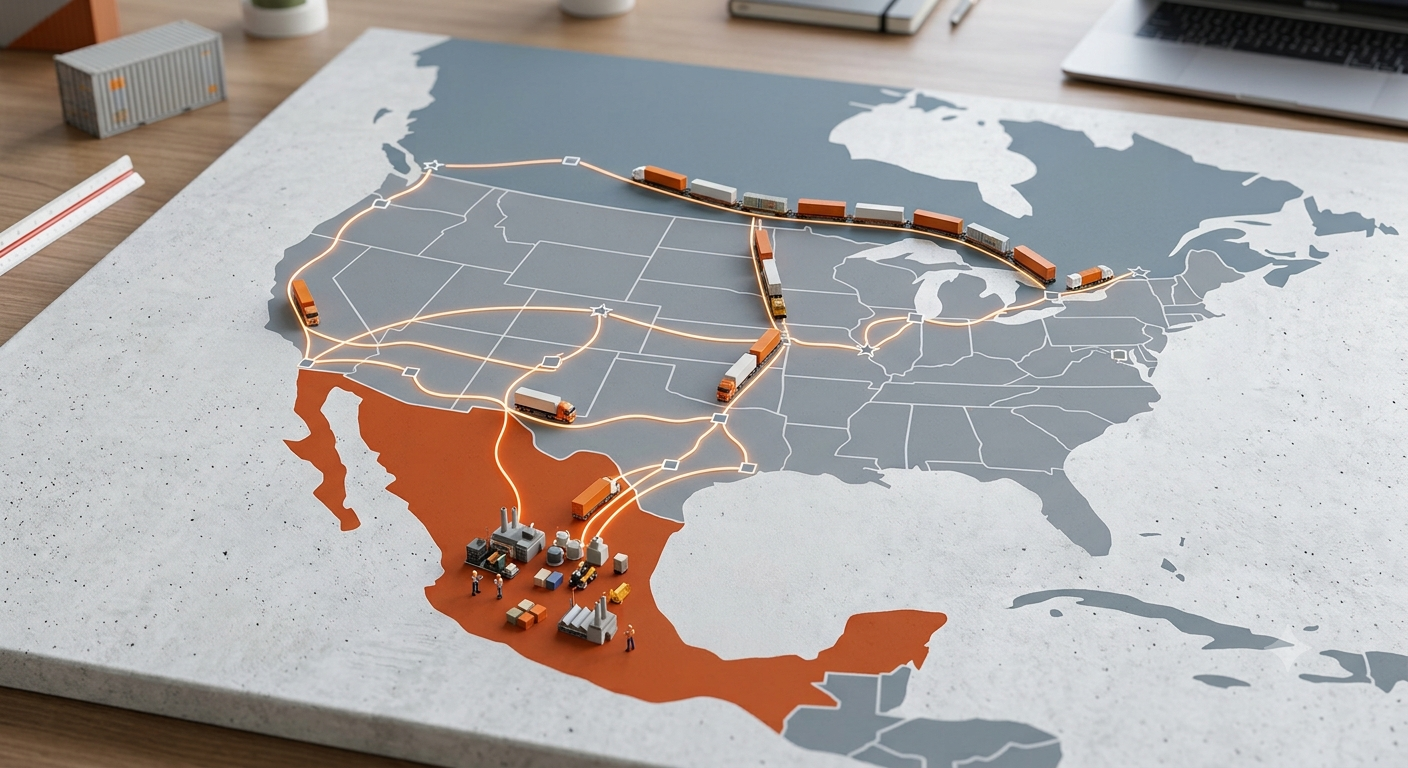
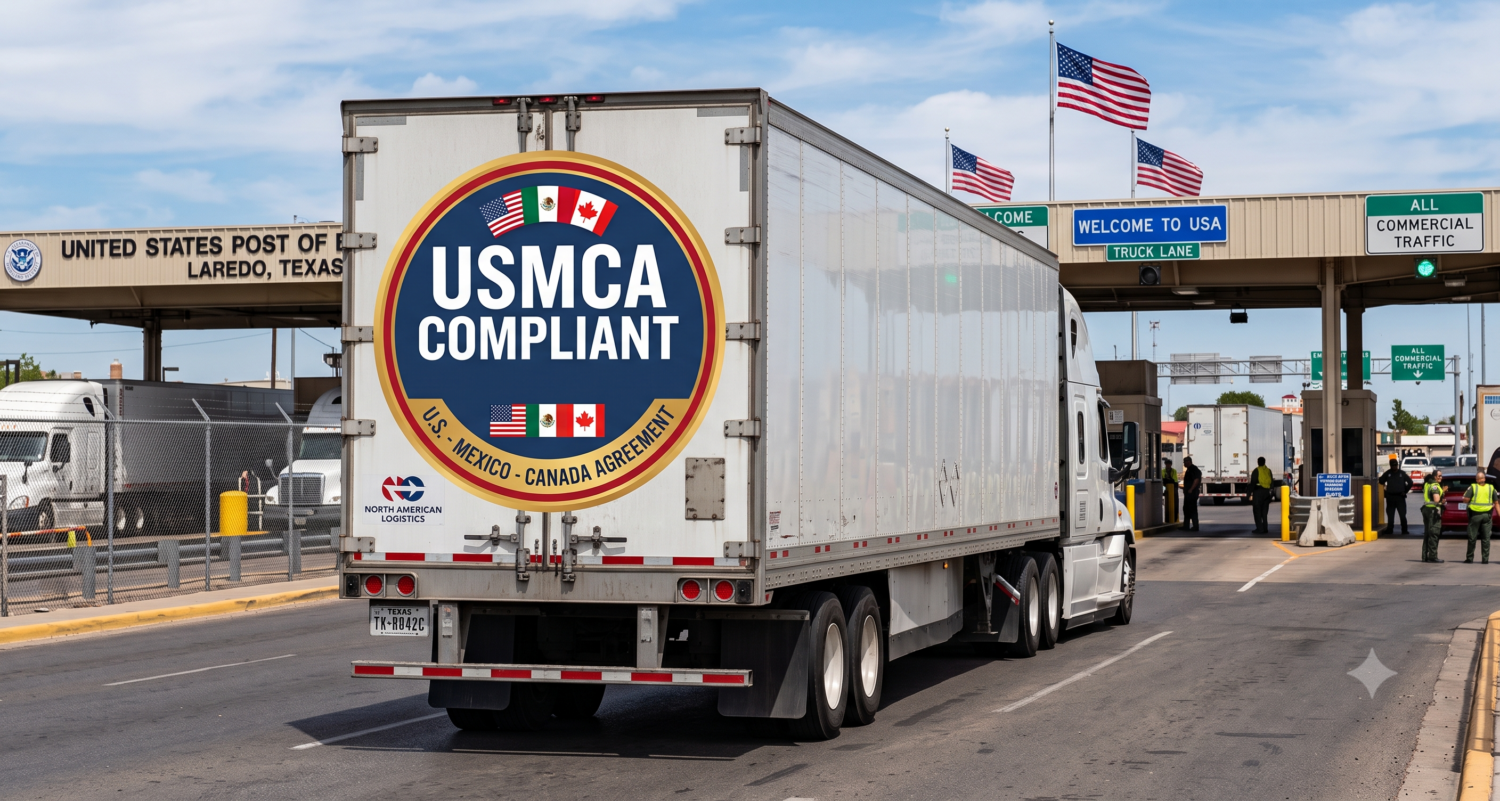
USMCA Rules of Origin: A Guide for Manufacturers in Mexico
If your company is already manufacturing in Mexico—or considering it—there is one concept you need to understand before making sourcing, production, or expansion decisions: USMCA Rules of Origin.
This is not just a bureaucratic requirement. Rules of Origin determine whether your product qualifies for preferential tariff treatment when entering the United States or may be subject to duties.
Table of Contents
What Are USMCA Rules of Origin?
USMCA Rules of Origin determine when a product is considered “originating” in North America under the United States-Mexico-Canada Agreement (USMCA).
When a product meets the applicable requirements, it may qualify for the agreement’s trade benefits, including zero-duty treatment in many cases. The purpose is to ensure these benefits apply to products that are genuinely manufactured and transformed within the region.
In other words, moving a finished product through Mexico before shipping it to the United States is not enough. There must be real, verifiable manufacturing transformation.
How Do Products Qualify Under USMCA Rules of Origin?
The specific rule depends on a product’s tariff classification. However, most origin determinations rely on two core requirements.
Tariff Shift Rule
The first requirement is the tariff shift rule.
Non-originating materials must be transformed in Mexico, the United States, or Canada in a way that changes their tariff classification when they become the finished product.
This means that minor activities, such as repackaging, labeling, or simple assembly, may not be enough. The operation must create meaningful value through manufacturing, integration, processing, or substantial assembly.
Regional Value Content
The second requirement is Regional Value Content, or RVC.
This requirement establishes that a portion of the product’s value must come from North America. The exact threshold depends on the product, industry, and applicable calculation method, but it often falls within an approximate range of 50% to 75%.
To evaluate RVC accurately, manufacturers need to understand:
- The origin of every component and raw material.
- The tariff classification of inputs and finished goods.
- The value added within North America.
- The manufacturing processes completed in Mexico.
Stricter Rules of Origin for the Automotive Industry
The automotive industry is subject to some of the USMCA’s most demanding origin requirements.
Passenger vehicles and light trucks must meet a 75% Regional Value Content threshold. In addition, a specific portion of a vehicle’s value must be produced in North American facilities that meet Labor Value Content requirements, including an average wage of at least $16 per hour for certain activities and components.
For automotive manufacturers, compliance cannot be treated as a documentation exercise at the end of production. It needs to be part of sourcing, manufacturing, and cost strategy from the beginning.
Why Do USMCA Rules of Origin Matter Even More in 2026?
The 2026 USMCA review has placed Rules of Origin back at the center of the manufacturing conversation.
A key issue is North America’s reliance on inputs sourced outside the region, particularly from China. The direction of the discussion is clear: strengthen regional content, reinforce compliance, and ensure that the agreement benefits operations that create real value in North America.
This does not mean that companies using Asian components automatically lose eligibility. It means they need to examine their supply chain structure, the transformation completed in Mexico, and whether their operation can remain compliant under stricter requirements.
What Should Your Operation Review Now?
If your company manufactures—or plans to manufacture—in Mexico, now is the time to answer key questions:
- Does your product currently qualify for USMCA preferential treatment?
- Which non-originating materials are part of your supply chain?
- Do your Mexico-based processes meet the applicable tariff shift requirement?
- Does your product meet its required Regional Value Content?
- How prepared is your operation for tighter Rules of Origin requirements?
Waiting until requirements change can increase risk and complexity. Building compliance margins into your operation from the start helps protect access to the U.S. market and prevents costly adjustments later.
Build a USMCA-Ready Manufacturing Operation
Rules of Origin compliance requires coordination across sourcing, engineering, production, quality, and trade operations. It also requires an operational model that can respond to regulatory changes without compromising cost, delivery, or quality.
Through its nearshoring services in Mexico, The Nearshore Company helps manufacturers establish and operate with a practical focus on compliance, efficiency, and growth. We design operations around the realities of your supply chain and the requirements that affect access to the North American market.
Talk to Our Team About Your Origin Structure
Want to understand how USMCA Rules of Origin could affect your current operation or your Mexico manufacturing strategy?
Talk to our team to evaluate your origin structure and build a strategy ready for what comes next.