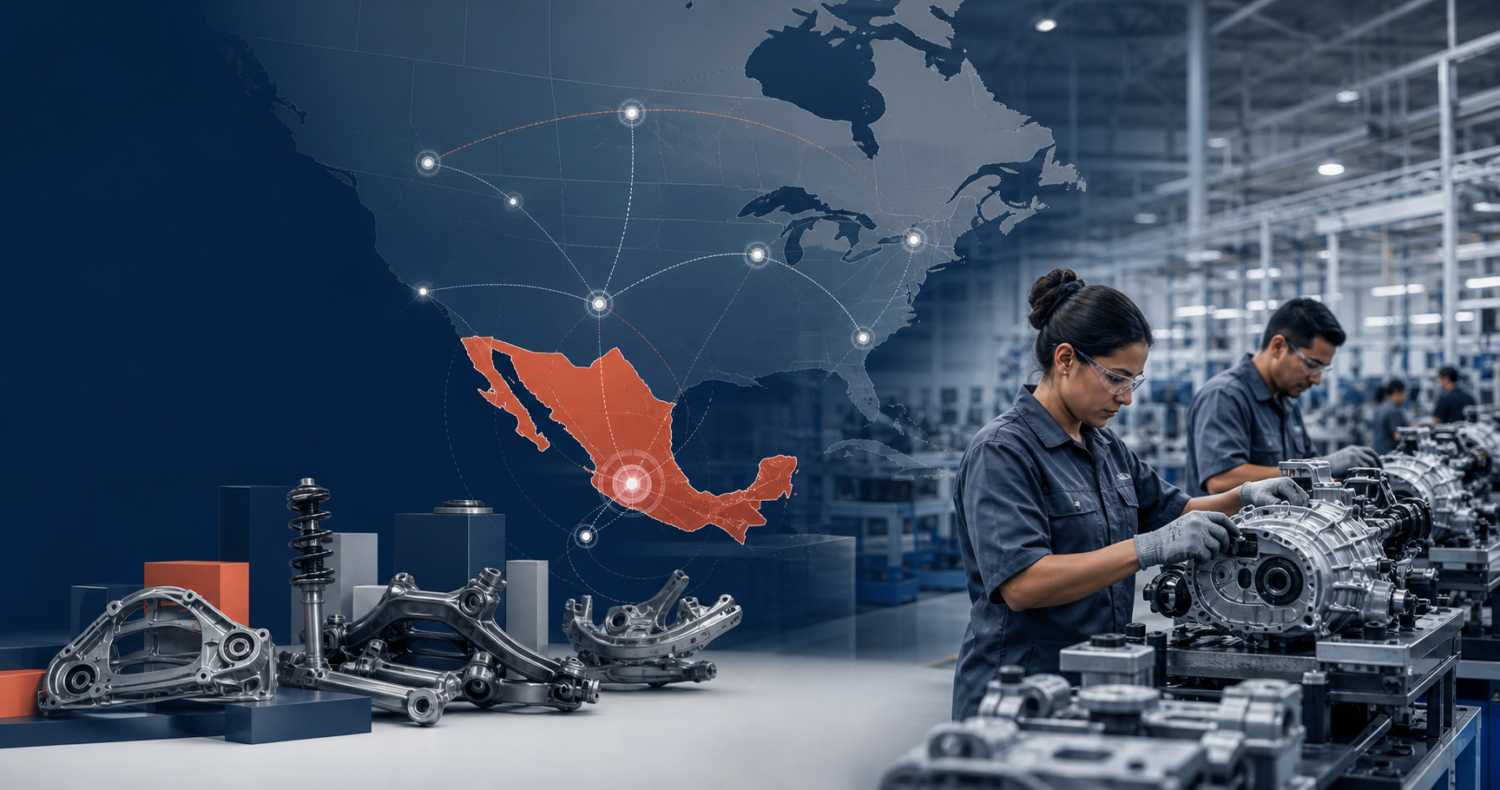

Mexico Tariff News: How Tariff Trends Benefit Mexico in 2025
Mexico tariff news from El Economista, citing the Mexican Council for Foreign Trade, Investment, and Technology (COMCE), shows a clear trend: Mexico is gaining a larger share of U.S. imports. With tariffs averaging lower than those imposed by Canada or China, it has become the most profitable manufacturing hub in North America.
This article analyzes the numbers behind that advantage, the role of the United States-Mexico-Canada (USMCA) in international trade, and the steps companies should take to develop nearshoring as a strategic advantage.
Table of Contents
What Does Recent Mexico Tariff News Reveal?
According to El Economista, the Mexican Council for Foreign Trade, Investment, and Technology (COMCE) projects Mexico will increase its share of U.S. imports from 16.4% in 2025 to 19% by 2028. This growth is linked to the tariffs on Mexico compared to its trade partners, China and Canada, giving the country a clear strategic advantage.
Why More U.S. Imports Are Coming from Mexico?
- Average Mexico tariffs on U.S. goods: 10.6%
- Average Canada tariffs on U.S. goods: 13.1%
- Imports from China are hit by a much higher 27.9% tariff.
These numbers help explain why Mexico is now a preferred trade partner in North America, thanks to lower tariffs, a strong manufacturing hub, and geographic proximity. Compared to tariffs in China, the benefits are even greater: one reason why nearshoring continues to gain popularity in 2025.
Why Is Mexico’s Tariff Advantage Strategic for Companies?
Data from The Yale Budget Lab shows that U.S. customs duties on goods from Mexico average 10.6%, compared to 13.1% for Canada and a striking 27.9% for China. This gap creates a strategic advantage for Mexico, making it more attractive for companies seeking stability in lower costs and greater predictability in global supply chains.
Rather than being a benefit visible only in charts, this advantage brings two real-world impacts that maintain Mexico’s position in trade and manufacturing:
1. Global Supply Chains’ Resilience
Mexico’s lower tariffs mean businesses face fewer cost shocks and reduced exposure to surprise policy changes. This stability helps companies keep production closer, cutting logistics delays and improving real-time response in cross-border trade.
2. Impact on International Trade and Manufacturing Sectors
Lower duties also improve competitiveness across manufacturing sectors, such as the automotive sector and medical device production. Combined with advantages in labor costs and a skilled workforce, Mexico is slowly growing as a reliable manufacturing hub in North America.
[Top view of four Mexican flags on a beige background, symbolizing Mexico trade, tariffs, and nearshoring opportunities]
How Tariffs Pressure Canada and China While Supporting Mexico?
Recent Mexico tariff news from El Economista shows how tariffs affect major economies in very different ways. According to the same report:
- Canada: projected –2.5% GDP decline as tariffs combine with retaliatory measures.
- China: expected –0.2% GDP drop, with added pressure from the current trade war and past actions of the Trump administration.
- Mexico: positive +0.09% GDP impact, supported by the United States-Mexico-Canada Agreement and stronger regional supply chains.
What Makes Nearshoring to Mexico a Smart Move?
As recent Mexico tariff news suggests, nearshoring to Mexico is a cost-saving tactic and a long-term strategy backed by tariff advantages, regional trade rules, and operational strengths. Three main factors explain why Mexico is an attractive option:
1. A Strong Manufacturing Hub
- Major industries such as the automotive sector and medical device production drive growth.
- Modern facilities guarantee advanced manufacturing services.
- Solid integration with regional supply chains across North America.
2. Skilled Workforce and Competitive Costs
- Access to a qualified labor pool with strong industry experience.
- More favorable labor costs compared to Asia and other trade partners.
- Logistics efficiency that improves delivery times.
3. Geographic Proximity and Trade Stability
- Production cycles are closely aligned with U.S. demand.
- Predictable framework under the United States-Mexico-Canada Agreement (USMCA).
- Reduced risk of disruption during global trade disputes.
What Companies Can Do Now?
To turn Mexico’s tariff position into measurable results, companies can take the following steps:
- Audit supply chain costs to calculate the total landed cost when comparing Asia with Mexico.
- Model tariff scenarios with finance teams to evaluate Mexico against other trade partners and anticipate future policy shifts that may affect operations.
- Plan early, since unreliable operational timing is the most common barrier to nearshoring success.
- Think regionally, adjusting production with U.S. demand cycles and using cross-border logistics for more real-time responsiveness.
Capture the Advantage of Nearshoring to Mexico with The Nearshore Company
Past concerns around Trump’s reciprocal tariffs on Mexico have changed. Today, the USMCA offers a stable and predictable trade environment, making Mexico a more reliable choice for companies looking for certainty in international trade. The companies seeing real success in Mexico share one thing in common: they chose a provider with experience.At The Nearshore Company, we work side by side with manufacturers and suppliers to turn these advantages into growth. We make sure your business reduces costs, builds resilience, and creates a stronger position in North America. Contact us today and let’s build that future together.