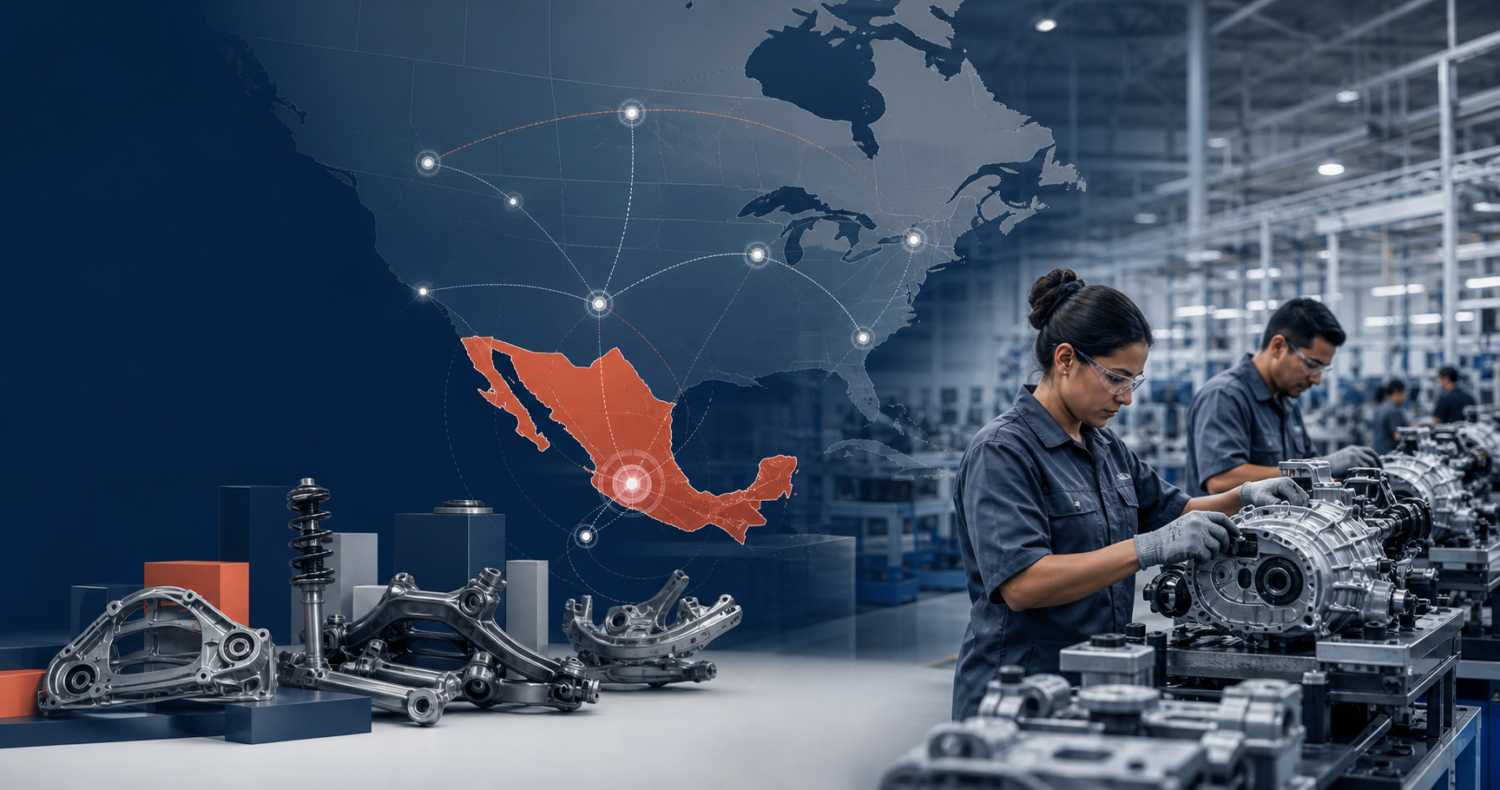

USMCA Nearshoring in Mexico: 2025 Political and Economic Impacts
The United States-Mexico-Canada Agreement (USMCA) is shaping trade relations across North America, presenting new opportunities for companies rethinking their supply chains. In 2025, Mexico is becoming a strong option for manufacturing and logistics due to favorable tariff conditions, expanding infrastructure, and closer regional cooperation.
This article reviews the most recent policy changes affecting USMCA nearshoring and explains how they may impact companies establishing or expanding their presence in the North American market.
Table of Contents
How is USMCA Nearshoring Changing North American Manufacturing in 2025?
USMCA nearshoring refers to relocating production and supply chain operations to Mexico to take advantage of the trade benefits included in the United States-Mexico-Canada Agreement. In 2025, companies are gradually adopting this approach to reduce costs, shorten delivery times, and strengthen market access within North America.
These are some key advantages under the USMCA regulations:
- Lower or zero tariffs on many goods traded within the region.
- Optimized customs processes, reducing delays at border crossings.
- Integrated rules of origin that encourage sourcing within North America.
- Modernized labor and environmental standards aligned with global compliance expectations.
Mexico’s growing importance is reflected in trade figures: in 2024, it became the largest supplier of imports to the United States, with a total value of USD 466.6 billion, representing 15.6% of all U.S. imports, according to Mexico News Daily. This shift confirms the country’s role in regional manufacturing and its competitive position under the USMCA framework.
Political Shifts in 2025 Reshaping USMCA Nearshoring in Mexico
In 2025, infrastructure projects, trade alliances, and tariff policies are redefining USMCA nearshoring in Mexico. These political decisions affect logistics, costs, and investment confidence, making them relevant for companies evaluating relocation under the agreement. Here are some changes:
- New Infrastructure for USMCA Trade in Puerto del Norte: inaugurated in August 2025, Puerto del Norte in Matamoros is Mexico’s first major port in 24 years. It shortens shipping times by up to five hours compared to Altamira and supports intermodal connectivity for sectors like automotive, steel, and energy.
- Canada-Mexico Cooperation Ahead of the USMCA Review: Canada is strengthening trade ties with Mexico to prepare for the USMCA review, driving for a united stance on potential U.S. tariff changes.
- U.S. Tariffs on Asia Increasing USMCA Nearshoring: Tariffs on Chinese and Vietnamese goods are motivating companies to shift production to Mexico. Only 20% of companies plan full reshoring to the U.S., making Mexico the more cost-efficient alternative, according to a Bank of America Global Research survey.
- “Plan México” and the Expansion of Industrial Zones: The Mexican government is developing 15 tax-incentivized industrial parks for automotive, aerospace, and logistics sectors, aligned with USMCA opportunities.
How Do Current Political Decisions Impact Businesses Considering Nearshoring?
The political and economic decisions introduced in 2025 under the USMCA regulatory framework are directly influencing how companies view Mexico as a production base. These developments are shaping the future of USMCA nearshoring across three main areas:
- Logistics and Delivery Times: Projects like Puerto del Norte reduce transit times and improve connectivity, allowing manufacturers to respond faster to market demand.
- Cost Competitiveness: Preferential tariffs and industrial zones with tax incentives help lower operational expenses compared to overseas manufacturing.
- Investment Confidence: Stronger Canada-Mexico cooperation and targeted infrastructure projects support long-term planning, although judicial reforms remain a point of concern for some investors.
USMCA Nearshoring by the Numbers: Key Industry Stats
Mexico’s position in USMCA nearshoring is becoming more defined as certain industries accelerate investment and production within its borders. The following figures show how political stability, trade advantages, and infrastructure improvements are translating into measurable results.
1. Automotive Manufacturing and Exports
Mexico produced nearly 4 million vehicles in 2024, and the automotive sector accounted for 31.4% of Mexico’s total exports, valued at USD 193.9 billion in 2024, according to Scotiabank. These figures reflect deep integration with U.S. and Canadian supply chains under USMCA.
2. Electronics and Advanced Manufacturing
The Electronics Manufacturing Services (EMS) market in Mexico is projected to grow from USD 53.2 billion in 2025 to USD 97.4 billion by 2031, at a CAGR of 10.6% as reported by Mobility Foresights. Growth is fueled by nearshoring of high-tech production lines, including semiconductors, telecommunications equipment, and automation systems.
3. Aerospace and Specialized Industries
Mexico’s aerospace exports reached USD 10 billion in 2024, according to Mexico Business News, surpassing previous records and marking a full recovery from pandemic-related declines. This achievement expands the country’s position as a key supplier within North America’s aerospace supply chains.
4. Regional Export Leaders
As shown by ProMéxico Industry, in Q1 2025, Chihuahua, Coahuila, Nuevo León, Baja California, and Tamaulipas accounted for over 50% of Mexico’s manufacturing exports. This concentration of industrial activity near the U.S. border reduces shipping times and logistics costs, fortifying the strategic advantage of these states in USMCA nearshoring.
Positioning for Success Under USMCA Nearshoring
Mexico’s expanding role under USMCA is creating opportunities for companies seeking cost efficiency and stable supply chains. At The Nearshore Company, we help you evaluate feasibility, connect with reliable partners, and align operations with the trade advantages driving growth in 2025. Contact us to transform your nearshoring vision into measurable results.